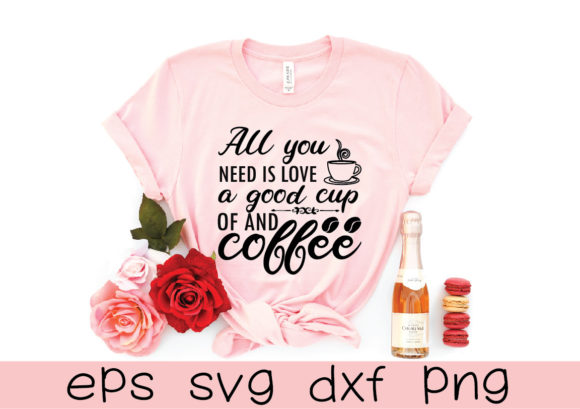
A Designer's Review: All You Need is Love a Good Cup
When a new embroidery design lands on my desktop, I’m looking at it not just as a graphic, but as a potential product. How will it stitch out? What kind of project does it whisper to me? And most importantly, will it resonate with a customer when they see it on a finished piece? Today, I’m thinking through All You Need is Love a Good Cup, a design that clearly leans into a cozy, comforting theme.
The Immediate Mood: Warm, Familiar, and Welcoming
The first impression is straightforward: this is about comfort and casual affection. The phrase “All You Need is Love a Good Cup” has that homemade, kitchen-wall wisdom vibe. It’s not overly sentimental; it’s practical and warm. As a machine embroidery design, the layout likely focuses on clear, readable text, possibly with illustrative elements around that “good cup.” The personality is friendly and unpretentious—perfect for a handmade product that feels personal rather than mass-produced.
This isn’t a design for a formal event. It naturally belongs on items meant for relaxation, gift-giving, or daily use. I immediately picture it on a well-loved kitchen towel, a cozy apron for a home baker, or a soft sweatshirt for a weekend morning. For a small business owner selling at a craft fair, this theme taps into a universally understood feeling of simple pleasure.
Real-Life Embroidery Scenarios: Where This Design Thrives
Let’s get practical. I’m imagining a specific project: a custom embroidered tote bag for a client’s coffee shop opening. They want something warm and inviting for their loyal customers. All You Need is Love a Good Cup could be a charming choice stitched onto the front of a canvas tote. The message aligns perfectly with a cafe’s brand of community and comfort.
Beyond that, its applications are wide for craft businesses and Etsy sellers:
- Sweatshirts & T-Shirts: As a chest or sleeve design, it creates a statement that’s easy to wear.
- Home Goods: Pillow covers for a living room, tea towels in the kitchen—it elevates ordinary items with a touch of personality.
- Personalized Gifts: Embroidered on a blanket or a baby’s bib (if stylized appropriately), it becomes a heartfelt gift.
- Small Shop Merchandise: For a boutique selling handmade products, this design on an apron or cap can define a cozy, artisan brand aesthetic.
The value here is in its relatability. In a digital embroidery file, its clarity will be key. When stitched, the text must be clean and legible to maintain that warm, professional feel. A customer seeing this on a finished embroidered patch or directly on a garment should feel the quality in the stitch definition.
Caution Areas: Where to Pay Extra Attention
No design is perfect for every single application, and a thoughtful designer knows where to apply caution. With a phrase-based design like this, the devil is in the details—the lettering.
- Small Hoop Sizes & Tiny Lettering: If the design has very fine details or script, testing on scrap fabric is non-negotiable. Stitch density and running stitch integrity on small text can become problematic.
- Textured or Stretch Fabrics: Embroidering this on a slouchy sweatshirt or a terrycloth towel? Stabilizer choice becomes paramount to prevent puckering and keep the message crisp.
- Dark Fabric Backgrounds: This is a classic consideration. The thread colors need to have enough contrast and pop. I always advise checking the design in a black-and-white mockup to gauge contrast before committing thread.
- Curved Surfaces: Putting this on a cap requires considering the layout’s adaptability to a curved plane. Some lettering might need slight adjustments in density.
For products that need frequent washing, like kitchen linens or baby clothes, a robust stitch construction is vital. This isn’t just about aesthetics; it’s about customer trust. A design that washes well translates to a product that lasts, which builds reputation for any creative entrepreneur.
The Impact on Your Business and Your Customer
Using All You Need is Love a Good Cup effectively affects more than just the stitch-out. It influences your brand’s presentation. A clean, well-executed embroidery of this friendly phrase on your custom apparel speaks to professionalism. It shows you understand both craft and sentiment.
For personalized gifts or holiday embroidery projects, its inherent warmth increases its “giftability.” People are drawn to products that express a simple, positive truth. In a printable mockup for your online shop, it should look appealing and clear, driving buyer engagement because the concept is instantly understood.
However, the design’s commercial success hinges on execution. Poorly chosen fabric or a messy stitch on dense areas can make it look amateurish. Conversely, a perfect application on the right product—like a high-quality cotton apron—can make it feel premium and worth the price.
A Professional’s Practical Notes Before You Stitch
Before I’d ever load this embroidery file for a client project or my own craft business items, my process is routine but critical:
- Test on Scrap: Always. Use the same fabric and stabilizer you plan for the final product. Check for any thread breaks in small details.
- Color Contrast Review: Look at your thread palette against your actual fabric, not just on screen. Does “love” stand out clearly?
- Hoop Size Check: Ensure the design fits comfortably within your planned hoop without forcing excessive scaling.
- License Confirmation: This is paramount for digital product sellers and commercial embroidery. The product description mentions it’s a cutting file, but for embroidery use, verify the licensing terms clearly. Can you sell the finished physical products? Can you use it in digital product previews? Never assume.
Remember, a design like All You Need is Love a Good Cup is a design asset. Its true value is unlocked by your skill and careful preparation. It has the potential to become a staple in your lineup for baby embroidery, holiday gifts, or everyday small shop products because its message is evergreen. But it demands your respect for the technical side of embroidery to ensure that warmth is translated perfectly into every stitch.